Separated by Distance, United by Purpose: How Distributed Production Teams Are Delivering Their Best Work
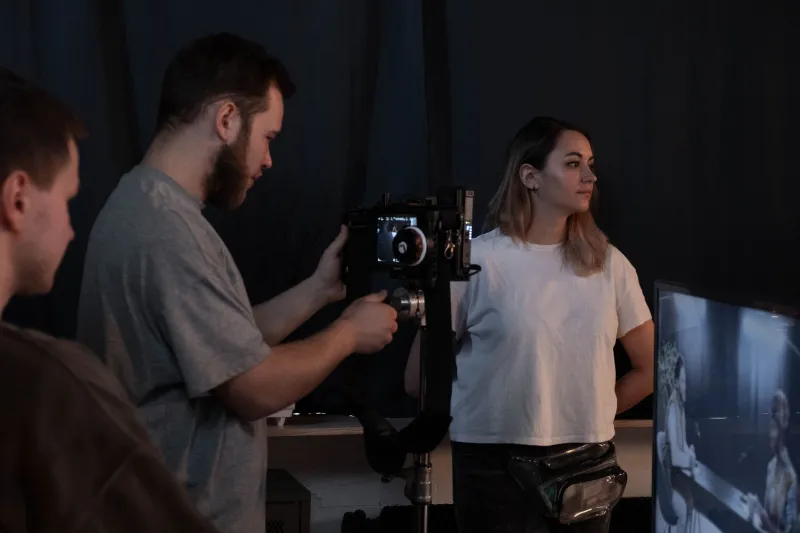
For decades, the mythology of entertainment production has been inseparable from place. The recording studio in Burbank. The edit suite in Manhattan. The writers' room in a converted warehouse somewhere in Los Angeles. The assumption was simple: proximity breeds collaboration, and collaboration breeds greatness. That assumption is now being tested—and in many cases, overturned—by production teams who have discovered that working apart can, paradoxically, bring a project closer together.
The shift began in earnest during the early 2020s, when the industry was compelled by circumstance to decentralize. What followed was not the creative collapse many predicted, but rather a quiet revolution in how entertainment professionals communicate, document, and ultimately execute their shared vision.
The Infrastructure Behind the Invisible Studio
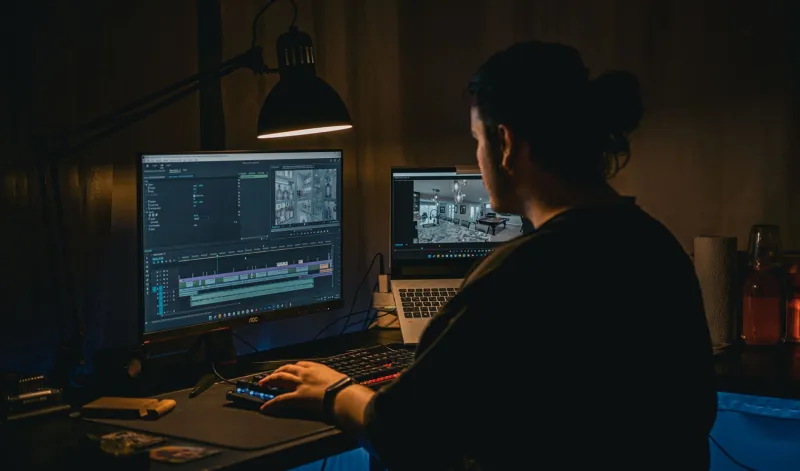
The success of remote production teams rests on a foundation of tools that have matured significantly over the past several years. Platforms such as Frame.io, Evercast, and Soho VFX have transformed the review-and-approval process, enabling directors, editors, and visual effects supervisors to evaluate footage in real time regardless of their geographic location. Cloud-based digital audio workstations, including collaborative environments built into tools like Splice and Soundtrap, have similarly expanded the possibilities for distributed music production.
But technology alone does not explain the creative dividend that many teams are reporting. The more revealing factor is behavioral. When a production team cannot rely on a spontaneous hallway conversation or an impromptu session at the mixing board, every exchange must carry more weight. Notes become more precise. Feedback becomes more considered. The creative record—the paper trail of decisions, revisions, and intentions—becomes more comprehensive than it ever was when everyone shared the same physical space.
This enforced rigor has a compounding effect. When a director of photography in Atlanta and a colorist in Chicago are working through a look for a film, the written and recorded documentation of their dialogue becomes a resource that the entire production can reference. Nothing is lost in translation because there is no informal translation to begin with.
Time Zones as Creative Assets
One of the more counterintuitive insights emerging from distributed production culture is the productive value of asynchronous work. A visual effects team based in Austin completing their handoff at midnight Eastern time means that a post-production supervisor in New York can begin their review first thing the following morning, compressing the feedback loop in ways that a traditional nine-to-five studio schedule rarely permits.
Music producers working across international time zones have described a similar phenomenon. A session file passed from a producer in Nashville to a collaborator in London overnight frequently returns in the morning with ideas that neither party would have generated had they been sitting in the same room, subject to the same social dynamics and the same creative pressures. Distance introduces a form of productive solitude into the collaborative process—a space for individual reflection that shared environments often foreclose.
This is not to romanticize the challenges. Coordinating across multiple time zones demands disciplined project management and clear communication protocols. The absence of nonverbal cues can slow certain kinds of creative negotiation. And the sense of shared momentum that a physical production floor generates is genuinely difficult to replicate through a screen. These are real costs, and experienced producers are candid about them.
What Intentional Communication Actually Looks Like
The studios and independent production companies that are thriving in distributed environments share a common characteristic: they have invested heavily in communication architecture. This is not merely a matter of scheduling more video calls. It is a structural commitment to clarity.
Production companies working in this model frequently employ dedicated creative producers whose primary responsibility is to maintain alignment across departments that may never physically occupy the same space. Pre-production documentation—mood boards, reference reels, detailed creative briefs—is treated not as supplementary material but as the connective tissue of the entire project. When a composer in Portland and a sound designer in Miami need to agree on the sonic palette for a feature film, a meticulously assembled audio reference document is not optional. It is the foundation on which every subsequent creative decision rests.
Some teams have also adopted practices borrowed from software development—sprint cycles, asynchronous stand-ups, shared project management environments—that bring a structural discipline to creative workflows traditionally resistant to systematization. The results, in many cases, have been projects that are both more coherent in their vision and more efficiently executed in their production.
A New Definition of the Studio
What the distributed model ultimately challenges is the idea that a production studio is a building. The most forward-thinking companies in the entertainment industry are beginning to understand that a studio is, more accurately, a network—a constellation of talent, tools, and shared purpose that can be assembled and reassembled depending on the demands of a given project.
This redefinition carries significant implications for how production companies recruit, how they structure their overhead, and how they conceive of creative ownership. A director who builds a distributed team for one project is, in effect, constructing a bespoke studio for that specific work—one that can be dissolved and reconstituted in an entirely different configuration for the next.
For an industry that has long measured prestige in square footage and zip codes, that is a genuinely radical proposition. But the evidence accumulating from the field suggests it is also an increasingly practical one. The work being produced by distributed teams is not a compromise. In many cases, it is the most ambitious, most thoughtfully executed work these professionals have ever made.
The couch in the corner of the edit suite, it turns out, was never really where the magic happened. The magic was always in the intention behind the work—and intention, as it happens, travels just fine.