Screen Time as Curriculum: How Digital Platforms Are Minting the Next Generation of Film Industry Professionals
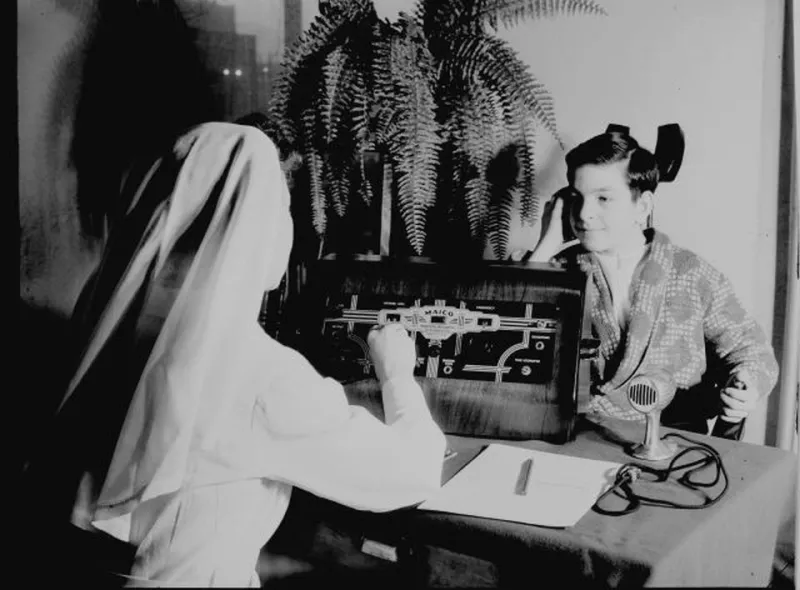
Photo: Conrad Poirier, Public domain, via Wikimedia Commons
For decades, the path into professional film and television production followed a relatively predictable trajectory: secure admission to a respected film program, accumulate student debt, network at festivals, and hope that the right internship translated into a sustainable career. That model, while still operational, is no longer the only viable route. A new generation of creators is arriving at the industry's front door having bypassed much of that conventional infrastructure entirely — and they are arriving with impressive credentials.
The currency of this new era is not the degree. It is the portfolio.
The Platform as Production Studio
YouTube, TikTok, and to a growing extent platforms like Instagram Reels and even Substack have evolved into something far more substantive than content distribution channels. For emerging filmmakers, they function as living production studios — environments where creators shoot, edit, publish, receive immediate audience feedback, and iterate in real time. This cycle, compressed into weeks rather than semesters, accelerates the development of technical and narrative instincts in ways that traditional classroom settings rarely replicate.
Consider the mechanics of producing a consistent YouTube series. A creator managing such an operation is simultaneously functioning as director, producer, cinematographer, editor, sound designer, and marketing strategist. The skill set being developed is not theoretical. It is applied, pressure-tested, and measurable by concrete metrics — view counts, audience retention rates, subscriber growth — that translate directly into the language of commercial production.
Production companies and agencies have taken notice. Talent managers and creative executives across Los Angeles and New York have reported an uptick in inquiries from young creators whose online portfolios demonstrate not just technical competency, but an understanding of audience engagement that many seasoned professionals are still working to develop.
Behind the Camera, In Front of the Algorithm
One of the more sophisticated strategies employed by emerging creators involves the deliberate documentation of their own production processes. Behind-the-scenes content, production diaries, and breakdown videos — in which creators dissect their own work, explaining lighting choices, narrative decisions, and post-production techniques — serve a dual purpose. They build audiences while simultaneously functioning as proof of professional-grade thinking.
This transparency is strategic. A creator who can articulate why a particular shot serves the story, or how a color grade was selected to reinforce emotional tone, is not simply performing expertise for an algorithm. They are demonstrating the kind of intentional craft that distinguishes a hobbyist from a working professional. When that content accumulates into a body of work spanning months or years, it constitutes something remarkably close to a public-facing production reel — one that any prospective collaborator or employer can evaluate without a formal interview.
Several young creators have leveraged precisely this approach to secure meaningful industry opportunities. Directors who built their reputations through short-form narrative content on TikTok have been approached for branded content campaigns by major entertainment labels. Cinematographers who documented their gear workflows and color science processes on YouTube have been contacted by independent production companies seeking crew members who already understand the technical demands of professional sets.
The Mentorship Gap and How Creators Are Filling It
One of the most frequently cited limitations of self-directed digital education is the absence of structured mentorship. Traditional film programs offer access to working professionals, guest lecturers, and faculty with industry experience — a network that is difficult to replicate independently. However, the online creator ecosystem has developed its own informal mentorship infrastructure, largely through community-based platforms and collaborative production projects.
Discord servers dedicated to independent filmmaking, collaborative YouTube channels built around shared production goals, and creator collectives that pool resources to produce short films have all emerged as substitutes for the cohort-based learning environment of formal education. These communities are not passive. They critique work, share industry contacts, co-produce content, and occasionally attract the attention of established professionals who engage with the work organically.
The result is a form of distributed mentorship that, while less structured than what a graduate program might offer, is often more immediately practical. Feedback is rapid, collaboration is project-based, and the stakes — in terms of public visibility — are real.
What the Industry Is Actually Looking For
It would be an overstatement to suggest that traditional credentials have become irrelevant. Major studios, broadcast networks, and established production companies still maintain hiring pipelines that favor candidates from recognized programs, and certain technical roles continue to require the kind of deep, supervised training that formal education provides. The shift is more nuanced than a simple displacement of the old model.
What has changed is the threshold of entry for project-based and freelance opportunities — which represent an increasingly significant portion of the industry's overall employment landscape. In these contexts, demonstrated output carries substantial weight. A producer reviewing candidates for a branded content project is likely to spend more time evaluating a creator's published work than reviewing their academic transcripts.
This reality has prompted a recalibration among some film educators as well. A number of university programs have begun integrating platform-based production projects into their curricula, recognizing that the ability to produce content for digital audiences is now a professional competency rather than an extracurricular pursuit. The line between the classroom and the platform is blurring in both directions.
Building a Body of Work in Public
For creators currently navigating this landscape, the strategic imperative is clarity of purpose. The most effective digital portfolios are not simply collections of content — they reflect a coherent creative voice and a demonstrable understanding of the production process. Quantity without intentionality rarely translates into professional opportunity.
The creators who have successfully converted online audiences into industry relationships tend to share a few common characteristics. They are consistent in their output, deliberate in their documentation of process, and articulate about the choices that define their work. They treat each project — regardless of budget or scale — as an opportunity to demonstrate professional-grade thinking.
For a production company like Divano Productions, whose mission centers on bringing stories to life with craft and intention, this emerging generation of self-taught creators represents both an opportunity and a responsibility. The tools of storytelling have never been more accessible. The question now is how the industry receives, supports, and integrates the talent that those tools are producing.
The answer, increasingly, is that the industry is paying close attention — and the creators who understand that attention is earned through consistent, intentional work are the ones finding their way to the table.