Snack Table Diplomacy: The Sacred Rituals That Keep a Film Set Running
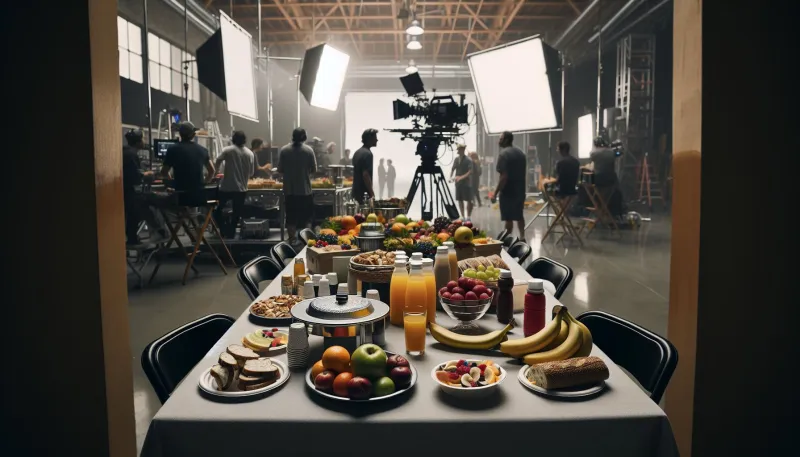
Photo: craft services snack table on film set with coffee, via craft-chic.com
Ask any crew member what holds an American film set together and they will not say the director's vision or the producer's spreadsheet. They will point, wordlessly and with deep reverence, toward a folding table draped in a vinyl cloth, bearing a chafing dish of questionable eggs and the day's coffee order. Craft services is the beating heart of production — and its etiquette is older, and more strictly enforced, than most union rules.
The Hierarchy of the Table
Every set has a snack table, and every snack table has a constitution. The rules are never written down, but every grip, gaffer, and PA learns them by the end of day one:
- The coffee belongs to everyone, but the last cup belongs to whoever made it. This is not negotiable. Violators have been known to buy the pot for the remainder of the shoot.
- The good snacks appear after the hard setups. Candy and chips surface like clockwork around hour five. No one asks where they come from. No one needs to.
- Crafty is not a meal. Veterans know to eat breakfast like a person with sense, because the table is a snack station, not a restaurant, and the burritos at lunch will be claimed by the camera department within ninety seconds.
- Never — ever — touch the talent's separate spread. Some arrangements are diplomatic in nature, like embassy soil.
The Secret Language of the Lot
Film sets run on shorthand. "Martini" is the last shot of the day; "Abby Singer" is the second-to-last, named for a legendary assistant director who had a gift for knowing when to wrap. "Hot set" means don't touch anything. "Checking the gate" once meant verifying film in the camera; today it survives as a nostalgic phrase for verifying the take, even in a digital workflow with no gate to check.
New PAs learn quickly that "kill the walkie" means silence on channel one, that "fire in the hole" precedes a slate clap, and that when the 1st AD says "last looks," makeup artists move with the urgency of paramedics. The vocabulary is a membership card. Speak it, and you belong.
Why It Matters More Than It Seems
Behind the comedy is something sincere. A film shoot is a temporary village — a hundred strangers thrown together for twelve hours a day, six days a week, in a warehouse or a field in Georgia. The rituals, the jokes, the table with its dwindling supply of granola bars: these are the small ceremonies that turn a crew into a company.
Producers who understand this spend real money on craft services, and not out of charity. Morale is a line item that pays for itself. A well-fed, well-timed crew moves faster, complains less, and forgives the 14-hour day a little more readily. The best assistant directors know that managing a set is 20 percent scheduling and 80 percent reading the room — and the room reads its mood off the snack table.
A Toast to the Unsung
So here's to the crafty van parked at golden hour, to the coffee that always seems to appear before the sun does, to the PAs who restock the cooler in the rain. Film sets are factories of make-believe, but they run on something very real: small kindnesses, repeated daily, at industrial scale.
The lights will wrap, the gear will be loaded, and the table will be folded away. But the culture it sustains — generous, unglamorous, quietly essential — is the truest behind-the-scenes story there is.