Beyond the Coasts: How Regional Production Hubs Are Rewriting the Economics of American Filmmaking
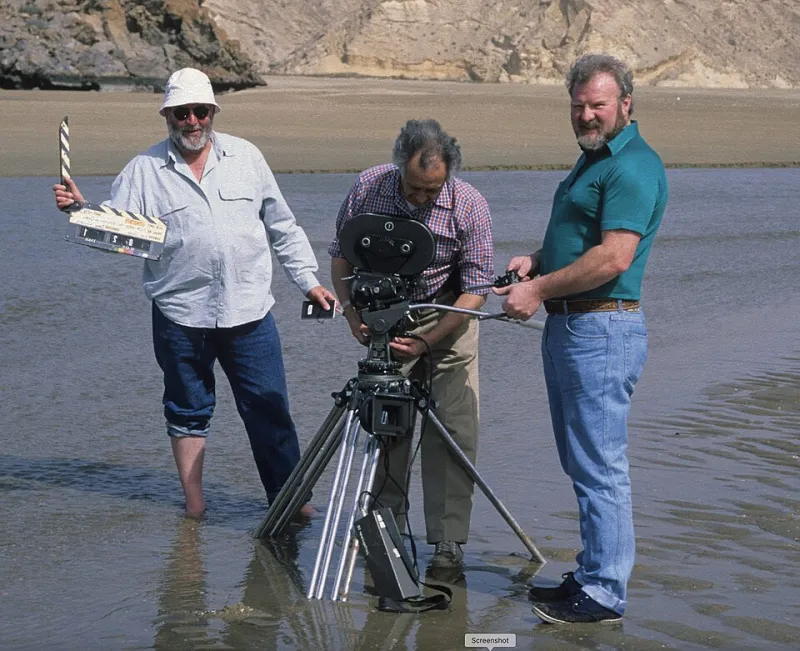
Photo: Guy WF Loftus, CC0, via Wikimedia Commons
For most of the last century, the American film industry organized itself around two coasts and treated everywhere else as a location to be visited. That assumption no longer holds. Crews in Atlanta, Albuquerque, Oklahoma City, Pittsburgh, and dozens of mid-sized markets now carry feature-scale experience across multiple cycles of production, and the vendors who support them — lighting and grip houses, camera rental desks, post facilities, catering companies, set construction shops — have grown up alongside them. What used to be a scouting decision has become a structural one.
The shift is not simply a matter of tax credits. Incentive programs are the loudest part of the conversation and often the least durable part of the calculation. The producers who are getting the most out of regional work treat a hub as a long-term relationship rather than a one-off transaction, and they evaluate it the way they would evaluate any other creative partner.
The arithmetic behind the shift
Three forces have converged. First, the volume of scripted production over the past decade pushed demand for experienced crews past what the coastal markets could supply, and local labor responded by building depth rather than just filling gaps. Second, state and municipal governments have invested in permanent infrastructure — soundstages, training pipelines through community colleges and university film programs, and permitting offices that now speak the language of production. Third, and least discussed, distributors and financiers have grown comfortable with the idea that a film shot in Ohio or Kentucky or New Mexico can look like anything at all.
That last point matters more than it appears. The old prejudice against regional production was aesthetic as much as logistical — a suspicion that a film made outside the industry's traditional centers would somehow announce its origins on screen. Streaming-era audiences have thoroughly disproved that.
What infrastructure actually means
When producers say a market has infrastructure, they usually mean something more specific than a stage and a rental house. The real test is whether a production can solve an unexpected problem on a Friday afternoon without flying someone in.
A useful way to think about it is in layers. The first layer is labor: not just the department heads, but the seconds, the day players, the people who can be called at short notice because they live twenty minutes away. The second is vendor reliability — whether the equipment you need exists locally, and whether the houses that own it answer the phone. The third is institutional: permitting, police and fire coordination, road closures, and a film office that functions as an advocate rather than a checkpoint. The fourth, and the one most often overlooked, is community tolerance. A market that has hosted a hundred productions knows how to absorb the disruption a film brings, and it knows how to say no to the wrong project.
A practical field guide for evaluating a hub
Before committing to a market, a producer should be able to answer a short set of questions with names and phone numbers rather than impressions.
- Who are the department heads, and what have they finished in the last eighteen months? Credits from a decade ago prove nothing about current capacity.
- What is the depth behind each key hire? A brilliant gaffer is less useful if there is no one to replace them when a conflicting booking appears.
- Which vendors are local, and which are satellite operations that route through another city? Both are workable, but they carry different costs and different response times.
- How does permitting actually function? Ask for the name of the person who will handle the production, and ask how long a road closure takes to approve.
- What is the local post picture? Editorial and color can travel, but dailies, sound, and finishing workflows benefit from proximity.
- What happens in a labor disruption or a weather event? Every mature market has an answer, and the answer is a useful proxy for how deeply the region understands production.
The hidden cost of chasing a credit
Incentives are real money and no producer should ignore them. But a credit that requires a market with thin crew depth can be expensive in ways that do not appear on the incentive spreadsheet: the cost of importing a department head and housing them for ten weeks, the schedule slippage that comes from a vendor learning on the job, the overtime created by a permitting process that has never handled a production of this size.
The rule of thumb among experienced line producers is that an incentive should be evaluated net of the cost of importing whatever the region lacks. In a mature hub, that number is small. In an immature one, it can quietly consume a meaningful share of the benefit.
Partnerships that outlast the shoot
Boutique studios and independent producers have an advantage over the largest buyers: they can afford to be loyal. A company that returns to the same region for a second and third project builds something the majors rarely do — a genuine working relationship with a crew that knows how the company operates, which shorthand it uses, and where it is willing to spend.
That continuity pays off in small, compounding ways. Local vendors prioritize repeat clients. Film offices take calls from producers they trust. Department heads recommend the project to people they want to work with. Over time, a studio can effectively extend its own institutional memory into a market it does not physically occupy.
The stories a region tells better than anyone
There is a creative argument here that tends to get buried under the financial one. A film set in a place, made by people who live there, carries a texture that is difficult to manufacture. Regional crews bring a working knowledge of local speech, geography, weather, and social rhythm that no amount of research travel fully replaces. For directors interested in specificity — the quality that most reliably separates a memorable film from a competent one — that is not a discount. It is an asset.
The producers likely to benefit most over the next several years are the ones who stop thinking of the map as a menu of incentives and start thinking of it as a set of creative communities with their own capabilities. The work is out there. So are the people who know how to make it.