Before the First Frame: The Invisible Architecture of a Well-Run Film Set
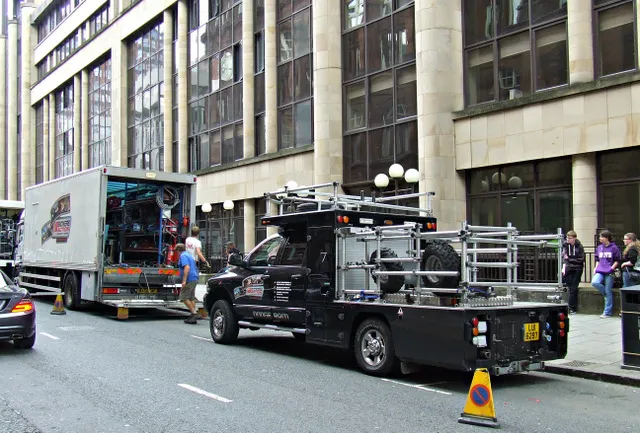
Photo: Thomas Nugent , CC BY-SA 2.0, via Wikimedia Commons
Ask a first assistant director what the most dangerous day of a production is, and the answer is rarely the day with the car rig or the crowd scene. It is the day the crew arrives at a location nobody properly scouted, to shoot a scene nobody adequately rehearsed. The disaster, in other words, was scheduled months earlier — by omission.
The Draft Nobody Signs
Veteran line producers describe pre-production as a first draft of the film that never carries a byline. Every choice made in those weeks — where the camera can physically stand, how many minutes an actor needs before an emotional scene, whether the sun sets behind the barn or in front of it — becomes a fixed constraint on what the finished movie can feel like.
"You can't direct your way out of a bad schedule," one Los Angeles-based line producer told us. "If the emotional peak of your film is a two-page scene and I've given it four hours at the end of a fourteen-hour day, the ceiling on that scene was set in the budgeting phase, not on set."
That is the uncomfortable arithmetic of the 40-page rule, as some ADs informally call it: the idea that the truest version of a screenplay is written in the roughly forty pages of pre-production paperwork — location agreements, shot lists, rehearsal notes, contingency plans — that determine how much of the script's ambition survives contact with reality.
Location Is Character, Whether You Planned for It or Not
Location scouting is routinely treated as logistics, but experienced directors treat it as casting. A diner's acoustics, the way afternoon light falls through venetian blinds, the distance between the parking lot and the door — these are performance conditions. An actor walking twenty feet in New Mexico heat arrives at a scene in a different emotional state than one walking five feet through a soundstage door.
Scouts who work regularly on US independent productions describe a hierarchy of concerns that surprises younger filmmakers. Power access outranks aesthetics. Cell coverage outranks charm. A location that photographs beautifully but requires a forty-minute company move twice a day will quietly bleed the budget of the very scenes that justified the location in the first place.
The best scouts, several producers agreed, think in scenes rather than spaces. They ask not "does this look right?" but "what does this place let the actors do that nowhere else can?"
Rehearsal: The Cheapest Special Effect
For a few thousand dollars of rehearsal time, a production can discover what a week of reshoots would cost to fix. Yet rehearsal remains the first line item cut from independent budgets, a pattern that first ADs view with something close to despair.
"Rehearsal isn't about memorizing lines," one Atlanta-based AD explained. "It's about discovering that the argument in scene 22 doesn't escalate until the third page, which means it can't be shot in two setups. You learn that in a living room for free. You learn it on set at about nine thousand dollars an hour."
Rehearsal weeks also build the informal trust that no call sheet can mandate. When a director and cinematographer have already argued about the shape of a scene over coffee, the set becomes a place for execution rather than negotiation. Crews feel the difference. Actors certainly do.
The Shot List as a Promise
A shot list is often mistaken for a creative document. In practice it is a contract — between the director's ambition and the day's clock. Producers read shot lists the way actuaries read risk tables: a 32-setup day with a company move is not a plan, it is a wish with a timestamp.
The discipline that separates smooth shoots from chaotic ones is rarely visible on screen. It looks like an AD building in a floating half-hour for the scene everyone secretly knows will run long. It looks like a producer insisting the weather day be scheduled into the calendar rather than merely feared. It looks like a director cutting their favorite setup because the storyboard math says the scene already works with five.
The Ceiling and the Floor
None of this diminishes the magic of principal photography. Sets do produce accidents of grace that no schedule predicted. But the industry's honest professionals acknowledge a humbling truth: pre-production doesn't just protect a film's floor — the worst it can be — it establishes its ceiling, the best it can be.
A scene rehearsed until the actors stop performing and start behaving has a resonance no coverage plan can manufacture. A location chosen for what it gives a scene, rather than how it photographs, becomes a character in the truest sense. The scaffolding is invisible in the finished film precisely because it did its job.
For production companies, the lesson is commercial as much as artistic. Clients and financiers rarely ask to see a scout report or a rehearsal schedule. But they feel the results, in films that seem effortless and sets that run on time. The first draft of a movie is written before anyone yells action. It is simply written by people whose names appear further down the credits.