Blueprint for Emotion: How Production Designers Are Quietly Becoming the Authors of Modern Cinema
There is a moment in nearly every great film when the environment itself seems to speak. A hallway that narrows imperceptibly. A kitchen bathed in a specific shade of amber that signals domesticity curdling into dread. A corporate lobby so aggressively symmetrical that the human beings moving through it appear incidental. These choices are rarely accidental. They are the work of production designers — professionals whose influence over cinematic storytelling has grown so substantial that the traditional boundaries of authorship are beginning to blur.
For decades, production design occupied a functional tier in the industry hierarchy. Designers built the world; directors inhabited it. That arrangement, always something of an oversimplification, has become increasingly difficult to defend. Contemporary production design operates less as a support function and more as a primary narrative instrument, one that shapes audience interpretation at a level that dialogue and performance alone cannot reach.
The Architecture of Meaning
The shift is not merely aesthetic. It is philosophical. Where earlier generations of designers were charged with creating plausible environments, today's leading practitioners are constructing systems of meaning — visual grammars that communicate character psychology, thematic tension, and structural irony before a single line of dialogue is delivered.
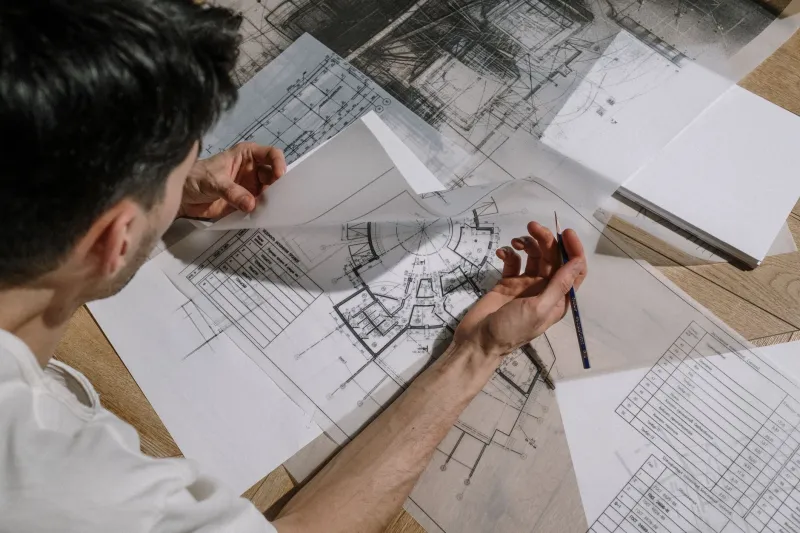
Consider how spatial geometry has become a storytelling device in its own right. Production designers working on prestige drama and independent features alike have spoken openly about the deliberate use of ceiling height, doorway proportions, and room orientation to externalize internal states. A character whose world is contracting might inhabit progressively smaller, lower-ceilinged spaces across a film's three acts. These decisions, made at the drafting stage, fundamentally condition how an audience receives a performance — often without their conscious awareness.
Color theory has similarly migrated from the palette of cinematographers into the domain of production design. The two disciplines have always overlapped, but the growing sophistication of designer-DP collaboration has produced environments in which every surface, every material, and every light-absorbing texture participates in the film's emotional argument. The result is a form of storytelling that operates below the threshold of articulation — felt rather than understood, absorbed rather than decoded.
Designer-Director Collaborations Redefining Creative Credit
Some of the most celebrated partnerships in contemporary American cinema are, at their core, collaborations between directors and production designers who share an unusually unified visual philosophy. These relationships often begin years before production and extend well into post-production discussions, with designers contributing to script analysis, location scouting, and even editorial decisions about pacing.
The practical consequence is that certain films carry the unmistakable imprint of their designer as clearly as they bear the signature of their director. When a production's visual world is so precisely articulated that it imposes its own logic on every scene — dictating wardrobe choices, influencing performance blocking, and determining how natural light is used or rejected — it becomes genuinely difficult to separate the designer's authorship from the director's.
This convergence has not gone unnoticed by critics and scholars. Academic programs at institutions including the American Film Institute and New York University have begun incorporating production design theory into their directing curricula, acknowledging that the discipline's conceptual ambitions now demand a shared vocabulary across departments.
Case Studies in Environmental Storytelling
The evidence is most legible in projects where production design choices have measurably altered critical reception. Films that might have read as conventional genre exercises have been elevated — or occasionally destabilized — by design decisions that introduced thematic complexity the screenplay did not explicitly contain.
In one widely discussed example from the past decade of American independent cinema, a production designer's decision to construct a family home using architecturally incompatible styles — mid-century modern furniture coexisting uneasily with Victorian structural elements — generated a persistent visual dissonance that critics subsequently interpreted as the film's central metaphor. The director later acknowledged that the design choice preceded and, in several respects, clarified the film's thematic intentions.
Similar dynamics have emerged in genre filmmaking, where production designers working within horror and science fiction have used environmental design to communicate narrative information that the screenplay deliberately withholds. The strategic placement of objects, the suggestion of histories embedded in surfaces, the implication of spaces existing beyond the frame — these techniques transform set dressing into a form of dramatic irony available only to the attentive viewer.
Institutional Recognition and the Question of Credit
Despite the expanding scope of their influence, production designers remain underrepresented in the industry's formal recognition structures. Award categories, press coverage, and public discourse still tend to center the director as the primary creative intelligence behind a film's visual identity. This asymmetry is gradually being corrected, but the pace of change reflects deep institutional habits that resist revision.
Several prominent designers have begun advocating publicly for a reconfiguration of how creative credit is assigned and communicated. Their argument is not that directors should be diminished, but that the collaborative nature of visual storytelling demands a more honest accounting of where specific decisions originate. In an industry that has spent considerable energy rethinking representation across other dimensions, the question of whose creative labor is acknowledged — and whose is absorbed into a more convenient narrative — carries genuine weight.
The Future of the Designed Film
As production budgets diversify and the demand for distinctive visual identities intensifies across streaming platforms and theatrical releases alike, the strategic value of exceptional production design has never been more apparent. Projects distinguished by coherent, conceptually rigorous environments command critical attention and audience loyalty in ways that technically proficient but visually generic work cannot replicate.
The designers most sought after in the current market are not decorators. They are theorists of space and meaning, collaborators capable of translating abstract thematic intentions into physical environments that an audience will occupy, however briefly, as a genuine emotional experience. Their work is the invisible architecture of cinema — the structure beneath the surface that determines whether a film merely plays or genuinely endures.