Grain, Grit, and Intention: Why Today's Filmmakers Are Reaching for Yesterday's Tools
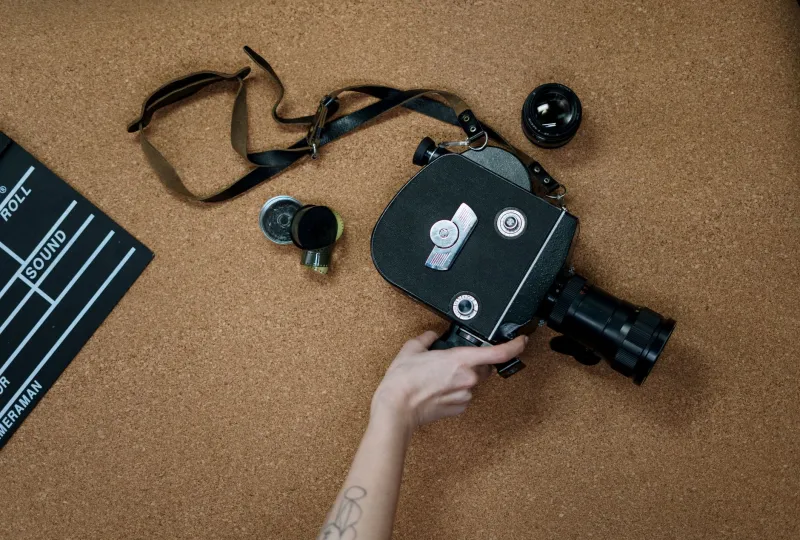
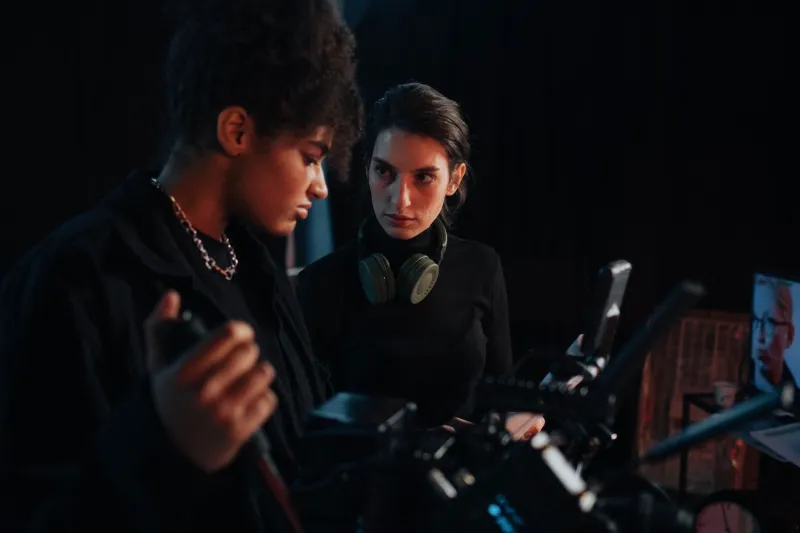
There is something almost paradoxical about the current moment in American filmmaking. The industry has never possessed more powerful digital tools — cameras capable of capturing detail that exceeds the resolving capacity of the human eye, post-production pipelines that can construct entire environments from computational geometry, color grading systems that offer essentially unlimited control over every photon in every frame. And yet, on sets across the country, directors and cinematographers are increasingly asking for film reels, optical filters, and equipment that predates the digital revolution by decades.
This is not a fringe movement. It is not the province of contrarians or purists operating at the margins of the industry. It is a deliberate, theoretically grounded creative strategy being pursued by some of the most commercially and critically successful filmmakers working in the United States today. Understanding why requires moving past the surface-level appeal of "vintage aesthetics" and engaging with the more substantive argument these practitioners are advancing: that constraint, unpredictability, and tactile engagement with physical materials produce a category of creative result that optimization cannot.
The Case Against Perfection
Digital production pipelines are, by design, oriented toward control. Every variable that can be measured can be adjusted, and every adjustment can be reversed. This flexibility is genuinely valuable — it reduces waste, accelerates iteration, and democratizes access to production capabilities that once required substantial capital investment. It also, some argue, produces a particular kind of creative timidity.
When every decision is reversible and every imperfection correctable, the incentive to commit fully to a choice diminishes. Cinematographers who shoot on film describe the experience in terms that digital practitioners often find difficult to translate: a heightened attention to each exposure, a willingness to accept what the light and the emulsion produce together, an understanding that the frame is being made rather than captured. The grain that appears in the final image is not a defect to be removed in post-production. It is evidence of a physical process — light striking silver halide crystals — that no algorithm has yet convincingly replicated.
Several directors of photography working at the feature level have spoken candidly about returning to film stock after extended periods shooting digitally. The common thread in their accounts is not dissatisfaction with digital image quality per se, but a sense that digital workflows had gradually altered their relationship to the act of filming — making it more managerial and less instinctive.
Practical Effects and the Performer's Response
The analog resurgence extends well beyond the camera department. Practical effects — physical stunts, in-camera optical tricks, miniatures, and mechanical constructions — are experiencing a parallel revival among filmmakers who have concluded that the performances generated in front of real phenomena differ qualitatively from those produced against visual effects markers.
The argument here is partly empirical and partly philosophical. On the empirical side, directors who have worked extensively with both approaches describe a consistent pattern: actors performing alongside practical effects engage differently with their environment. The physical reality of a collapsing set piece, an actual explosion at a calculated distance, or a mechanically operated creature demands a form of presence that a tracking marker cannot elicit. The resulting performances carry a quality of genuine reaction that audiences register, often without being able to articulate precisely why one film feels more viscerally immediate than another.
On the philosophical side, the preference for practical effects reflects a broader conviction about what cinema is and what it is capable of. A film that documents something that actually happened in front of a camera — however constructed or controlled that event may have been — participates in a different relationship with reality than one that assembles its world entirely in post-production. For filmmakers who hold this view, the choice between practical and digital is not merely technical; it is ontological.
Vintage Glass and the Texture of Vision
Lens selection has become one of the most active sites of analog reclamation in contemporary production. Cinematographers working on prestige projects are routinely specifying vintage glass — lenses manufactured decades ago, before the industry standardized around modern optical formulas designed to minimize aberration and maximize sharpness — in preference to current production optics.
The appeal is specific and describable. Older lenses render light in ways that modern optics deliberately avoid: a certain quality of fall-off toward the frame edges, a characteristic bokeh that varies with aperture in ways that feel organic rather than computed, a handling of flare and chromatic aberration that introduces visual complexity rather than eliminating it. These qualities, invisible to the casual viewer but immediately apparent to trained eyes, contribute to a film's overall texture — the sense that it was made in and of the physical world.
The market for vintage cinema lenses has responded accordingly. Prices for certain classic optics have risen substantially over the past several years, driven by demand from productions whose budgets would have allowed any equipment choice. The economic signal is unambiguous: the preference for vintage glass is not a budget constraint. It is a creative decision made by people who could choose otherwise.
Constraint as Creative Infrastructure
The deeper logic connecting film stock, practical effects, and vintage optics is a theory of creativity that places productive limitation at the center of artistic development. Filmmakers who champion analog methods tend to describe their tools not as restrictions but as collaborators — entities with their own characteristics that push back against the filmmaker's intentions and, in doing so, generate unexpected results.
This is a concept with deep roots in American artistic tradition, from the jazz musician's relationship to the physical instrument to the architect's negotiation with material and gravity. The digital production environment, for all its power, tends to position the tool as a transparent medium for the execution of predetermined intentions. The analog environment insists that the tool has something to say.
The Industry Listens
The commercial and critical success of projects that have prominently embraced analog methods has not gone unnoticed by studios and financiers who might otherwise be inclined to equate technological advancement with quality. Several recent productions that shot on film or incorporated extensive practical effects received both awards recognition and strong theatrical performance — a combination that tends to focus institutional attention.
The result is a gradually shifting conversation about what the production pipeline should be optimizing for. Resolution and dynamic range remain relevant specifications. But authenticity — the quality of feeling genuinely made rather than assembled — has entered the calculus as a value that audiences demonstrably respond to and that analog methods are uniquely positioned to deliver.