Song Cycles on Screen: Why the Visual Album Has Become a Serious Filmmaking Format Again
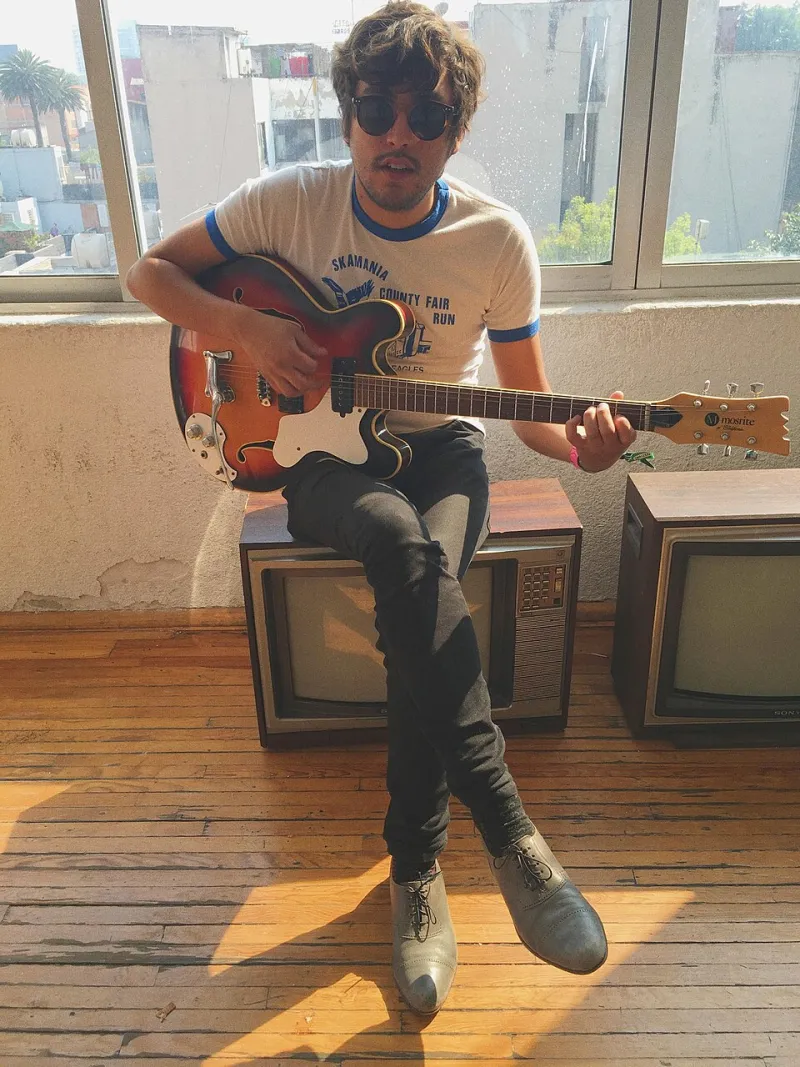
Photo: Alonso Mangosta (2016), CC BY 4.0, via Wikimedia Commons
The visual album is not a new idea. It has returned, in roughly ten-year cycles, whenever the technology of distribution caught up with the ambition of a musician. What is different now is the infrastructure around it. Directors who once treated a long-form music project as a side pursuit now find that it can be financed, produced, and placed with a degree of professionalism that matches independent narrative work — and that the audience for it arrives already assembled.
For production companies, this is a category worth understanding properly, because the economics and the creative logic both depart from conventional filmmaking in useful ways.
Why the format is resurging
Three conditions have aligned. Artists have grown fluent in visual language, having spent a decade building their own visual identities through short-form platforms. Directors have grown interested in forms that allow for episodic structure without the obligations of serialized television. And distributors — festivals, streamers, and the artists' own channels — have learned how to present work that sits between categories.
The result is a format that resists the usual labels. A forty-minute piece composed of five connected songs is not a music video, not quite a short film, and not a feature. It behaves differently in every market it enters, and that ambiguity, once a liability, has become part of its appeal.
From short-film suite to song-cycle narrative
There are broadly three shapes these projects take, and they demand different production approaches.
The first is the suite: a set of discrete short films, each built around a single track, sharing a visual grammar and often a location or cast. This is the most forgiving structure to produce, because pieces can be shot in separate blocks and edited independently. It is also the easiest to distribute in fragments, which suits an artist's promotional rhythm.
The second is the continuous narrative: a single story, told across the length of a record, in which the songs function as the film's internal logic rather than as interruptions. This is the most demanding version, requiring a full screenplay, a working script supervisor, and the discipline of narrative continuity. It is also the version most likely to be accepted at festivals on its own terms.
The third is the hybrid performance piece, in which staged or documentary material alternates with performed sequences. This structure has become more common as artists look for ways to represent the act of making music — the room, the rehearsal, the labor — alongside the finished songs.
How these projects get financed
Funding for a long-form music film typically comes from a combination of sources, and producers should map them early.
The artist's own label or management is often the anchor, treating the film as a marketing asset with a life beyond the release cycle. Brand partnerships can supply a substantial share when the fit is genuine rather than decorative. Production companies increasingly co-finance in exchange for ownership stakes or distribution rights. And in some cases, regional incentive programs apply, provided the project meets the employment and spending thresholds — a consideration that has quietly made certain markets attractive for music-driven work.
What distinguishes these productions from conventional independent film is the presence of a built-in audience. A musician with an established following brings a distribution guarantee that a spec narrative does not. That reduces risk considerably, and it gives a director something valuable during production: the knowledge that the work will be seen.
The distribution question
Placement strategy should be settled before the shoot, not after. The options are not mutually exclusive, but they require different deliverables.
- Festivals. Music-focused festivals and broader shorts programs both accept long-form music work, though submission strategies differ. A festival cut may run shorter than the release version.
- Streaming platforms. Presentation matters here; a suite of connected pieces can be programmed as a single work or as a collection.
- The artist's own channels. Increasingly the primary release window, and the one that generates the most direct audience response. Producers should plan deliverables for vertical and horizontal formats from the outset rather than cropping after the fact.
- Physical and deluxe editions. A limited run paired with a record release remains a viable route for work with a strong design identity.
What directors gain
The appeal for filmmakers is not hard to identify. A song cycle offers structure without the tyranny of plot, permission to work in a heightened register, and a rhythm imposed from outside the screenplay — the music itself dictates tempo, and the edit follows. For directors whose instincts run visual, it is unusually liberating.
It also offers a different kind of collaboration. The artist is not a composer delivering a score to picture; they are a co-author of the material, present in the room, with opinions about performance and image that come from a different discipline. Productions that go well are the ones that treat this as an asset rather than an intrusion.
Building the partnership
The practical lessons from companies working steadily in this space are consistent. Define the creative hierarchy in writing before production begins, particularly on editorial approval, because music projects invite more opinions than narrative ones. Build a schedule that respects the artist's other obligations, since touring and promotion rarely pause. Budget for a proper sound mix — the audience for this work is listening closely, and a compromised mix will be noticed faster than a compromised frame.
And choose the collaboration for the right reasons. The strongest music films are not advertisements with a plot. They are works in which a filmmaker and a musician happen to want the same thing, and the format is simply the shape that want takes.
For a production company, that is a genuine opportunity: a form with real artistic latitude, a defined audience, and enough flexible structure to fit a range of budgets. The song cycle has been waiting for the industry to take it seriously. It appears the industry has begun to.